
KHEERAN Corporation provides advanced ballast investigation services in Brazil, bringing multi-frequency Ground Penetrating Radar (GPR) technology to South America’s largest railway network. Our continuous, non-invasive survey methodology delivers precise substructure condition data across any Brazilian railway corridor. As a result, railway owners make informed maintenance and capital renewal decisions — based on real data, not assumptions.
Ballast Investigation in Brazil: Why It Matters
Brazil’s railway network carries vast volumes of agricultural and industrial freight. Furthermore, the tropical climate, heavy axle loads, and contamination from mineral and agricultural operations accelerate ballast degradation significantly. Consequently, fouled ballast, trapped moisture, and weakened substructure are persistent challenges across the Brazilian network. Therefore, continuous GPR ballast investigation is the most effective way to manage these conditions proactively.
KHEERAN’s GPR Technology for Brazilian Railways
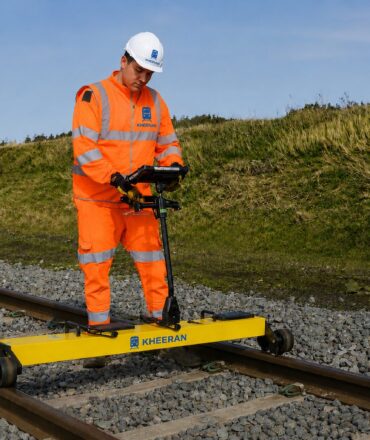
KHEERAN’s IDS SafeRail multi-frequency GPR system simultaneously operates 400 MHz ground-coupled and 1 GHz air-coupled antennas. Therefore, a single survey pass delivers both deep substructure profiling and high-resolution ballast fouling detection. Additionally, all data is synchronised with GPS and railway chainage — ready for integration into Brazilian asset management systems.
AI-Powered Analysis and Reporting
Furthermore, raw GPR data is processed using KHEERAN’s AI-powered analytics platform. Machine learning classifiers apply STFT analysis to produce continuous fouling maps and Selig Fouling Index classifications. Moreover, maintenance priority recommendations are generated automatically. As a result, your team receives actionable, georeferenced outputs — not raw data files. Contact KHEERAN today to discuss your Brazilian railway ballast investigation project.
Engineering Standards Behind Ballast Investigation in Brazil
KHEERAN’s ballast investigation Brazil methodology aligns with internationally recognised railway engineering standards, including guidance from AREMA. Furthermore, ballast condition is classified using the Selig Fouling Index — the internationally accepted standard for ballast condition assessment used by railway engineers worldwide. Additionally, all KHEERAN deliverables are GIS-referenced and compatible with Brazilian railway asset management systems — ready for integration into maintenance planning and capital renewal workflows. Consequently, Brazilian railway owners receive ballast investigation outputs that meet internationally recognised engineering standards.