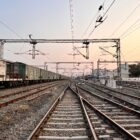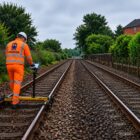
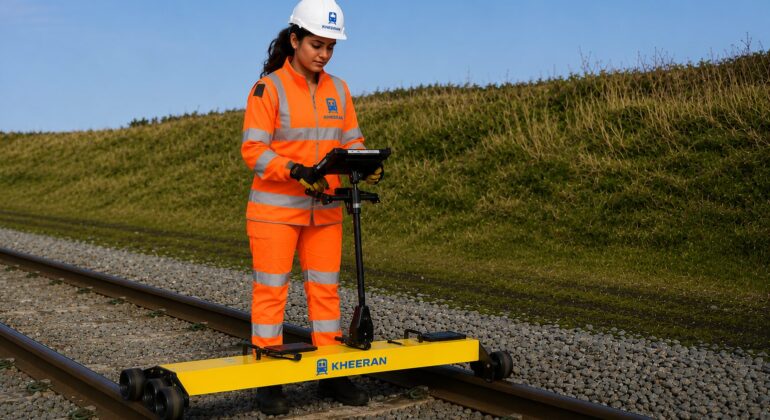

Track geometry is simply how the rails sit in space — their gauge, how straight they run, how level they are, and how those values change along the line. When geometry drifts outside safe limits, trains ride rough, rails and wheels wear faster, and in the worst case the track can cause a derailment. Measuring geometry continuously is how railways catch that drift before it becomes a problem.
What gets measured
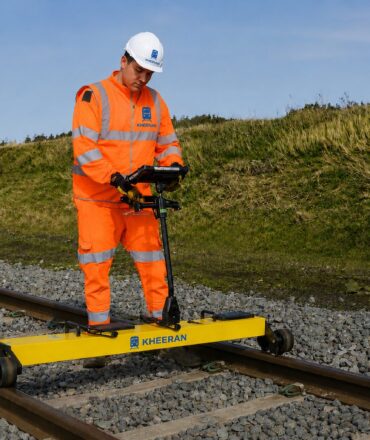
A geometry survey records gauge (the distance between rail heads), horizontal alignment (side-to-side straightness), vertical profile (the up-and-down surface of each rail), cross-level or superelevation (the height difference between the two rails), and twist or warp (how quickly cross-level changes). On curves it also captures curvature and the cant deficiency that governs safe curve speed. Modern systems measure dozens of these channels simultaneously, sampling at fine intervals and tagging every reading with GPS and chainage.
Measured against real standards
Geometry isn’t judged against an arbitrary yardstick. In the USA the limits come from the Federal Railroad Administration’s Track Safety Standards (49 CFR Part 213); in Canada from Transport Canada’s Rules Respecting Track Safety; and internationally from the EN 13848 series. The allowable values depend on the track’s Class — which is set by the maximum permitted train speed — so a defect that’s acceptable on a slow siding may be a serious exception on a mainline. Where conditions would force a two-class drop, that’s flagged as serious non-compliance.
From raw data to a quality score
Beyond pass/fail exceptions, geometry data yields a Track Quality Index — a roughness score that rates each segment good, average or poor within its class. Because the same stretch is surveyed repeatedly, the index reveals not just today’s condition but the rate of deterioration, so maintenance can be planned before a defect appears.
Finding the cause, not just the symptom
A geometry fault is a symptom. The cause often lies below: fouled ballast that no longer supports the track, trapped water softening the formation, or a thinning ballast layer. That’s why KHEERAN pairs geometry measurement with GPR substructure data — so a recurring surface defect can be traced to its real cause and fixed once, rather than repeatedly tamped.
Want geometry data you can act on? See our track geometry service.