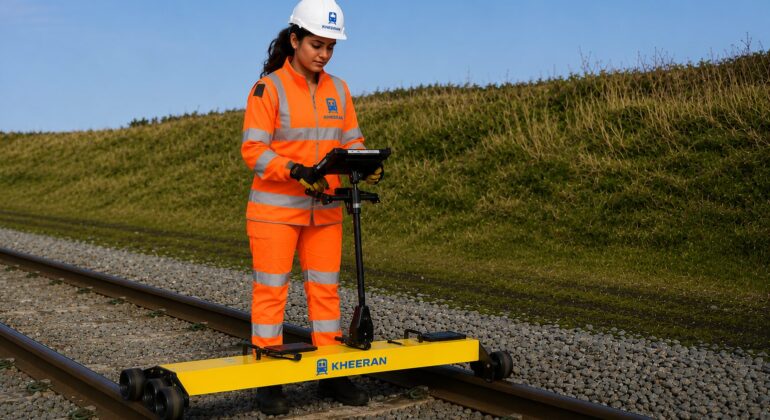
Rail track geometry is the measurable shape of a railway track in space — and it is the single most important indicator of whether a line is safe to operate at its permitted speed. Rail track geometry defines whether the rails are the right distance apart, whether the track surface is smooth or rough, and whether the horizontal and vertical alignment follows the design intent. When rail track geometry is within tolerance, trains run safely and efficiently. When it drifts outside tolerance, the result ranges from passenger discomfort and speed restrictions all the way to derailment.
Moreover, the FRA 49 CFR Part 213 Track Safety Standards define the specific tolerance limits and inspection requirements that govern rail track geometry across all classes of track in the United States.
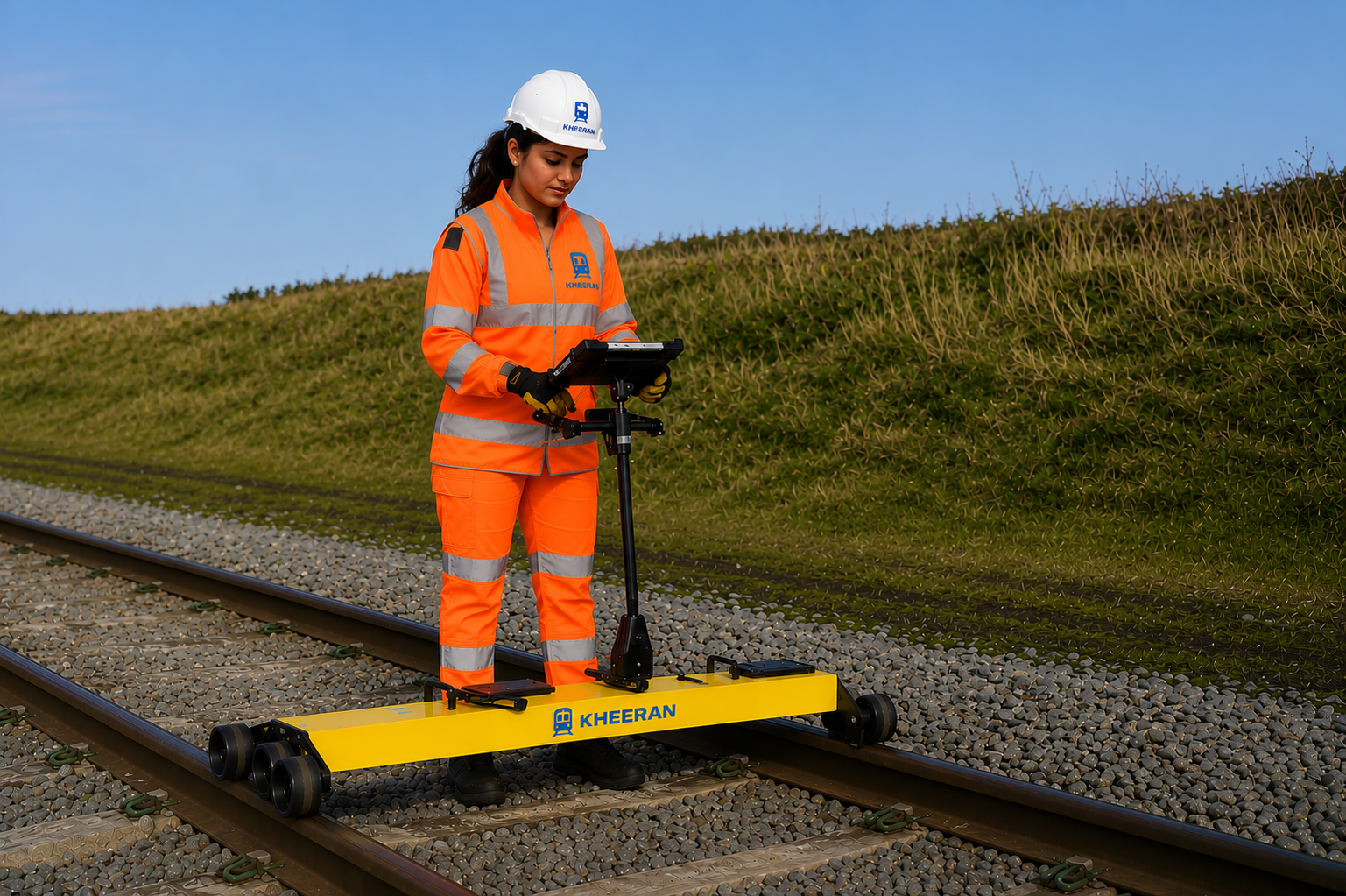
For rail operators, continuous rail track geometry measurement is the primary tool for understanding where the track is degrading, how fast, and what maintenance intervention will correct it.
The Six Parameters of Track Geometry
1. Gauge
Gauge is the distance between the inner faces of the two rails, measured 14–16 mm below the rail head. Standard gauge is 1,435 mm (4 ft 8½ in). Gauge too wide allows wheels to drop between the rails; gauge too narrow generates excessive flange forces. Both conditions become dangerous at high speed.
2. Alignment (Horizontal)
Alignment measures the lateral position of the track relative to a design chord. Irregularities generate lateral forces on the vehicle and, at sufficient magnitude, can cause rail rollover or wheel climb derailment.
3. Surface (Vertical Profile)
Surface measures vertical irregularities along the top of the rail. A rough surface generates dynamic impact loads that multiply effective wheel load — accelerating rail, fastener, and substructure wear.
4. Cross-Level (Cant)
Cross-level is the height difference between the two rails. On curves, intentional cross-level (superelevation) counters centrifugal force. Unintended variation in tangent track destabilises vehicle roll and contributes to wheel unloading.
5. Twist
Twist is the rate of change of cross-level over a defined chord length. High twist places one wheel in the air while three remain on rail — the rocking condition that precedes many derailments. Twist is one of the most safety-critical geometry parameters.
6. Curvature and Superelevation Runoff
Curvature measures the rate of directional change through curves. Abrupt changes generate dynamic forces that exceed vehicle design limits.
As a result, compliance with these standards is not merely a regulatory obligation — it is the operational baseline that protects infrastructure, rolling stock, and passengers. Furthermore, understanding which standard applies to your territory is the first step in designing an effective geometry inspection programme.
Regulatory Standards: FRA, Transport Canada, and EN 13848
United States — FRA 49 CFR Part 213. The FRA defines six Track Classes, each permitting progressively higher speeds and requiring tighter geometry tolerances. Defects are classified as Exceptions or Immediate Action Limits.
Canada — Transport Canada Rules Respecting Track Safety. Canada’s framework mirrors the FRA class structure with provisions specific to Canadian heavy-haul and cold-climate operations.
International — EN 13848. The European standard introduces the Track Quality Index (TQI), enabling network-level condition trending that single-defect hunting misses.
Kheeran evaluates geometry against all three frameworks as required by the operating territory.
Run-Over-Run Comparison: Where the Real Value Lies
Continuous measurement produces a chainage-referenced record comparable run-over-run to calculate deterioration rates. Knowing how fast a defect is developing allows maintenance teams to prioritise tamping interventions on segments deteriorating fastest, schedule preventive maintenance before defects reach speed-restriction thresholds, and identify sections where unusually fast deterioration signals an underlying substructure problem.
The Link Between Geometry and Ballast Condition
A surface defect caused by fouled ballast will return within weeks of tamping — because the root cause was never addressed. Kheeran pairs geometry data with GPR ballast investigation data, cross-referencing geometry defect locations against ballast fouling and trapped water flags. This root-cause pairing distinguishes defects requiring tamping only from those requiring undercutting or drainage remediation first.
What a Kheeran Geometry Survey Delivers
Continuous geometry brush charts with flagged exceptions, FRA/TC/EN exception lists, curve analysis, Track Quality Index by segment, KML map files, run-over-run deterioration analysis, and CSV data exports compatible with your maintenance management system.
Talk to Kheeran about your next geometry campaign.